Tuesday, May 27, 2014

Four Days of Comprehensible Input: Day 1

Bob Patrick presents Comprehensible Input theory.
I know I did a blog post about the the same topic this time last year.  What can I say?  When I find a method--or really, a philosophy--of teaching that works, I do as much research and training as I can in that method.  As Bob said today, there is always something new to learn.  The great thing about adopting comprehensible input as a teaching philosophy is that it can include so many, many different approaches and ideas and as long as I'm delivering understandable messages in the target language I'm doing it right.

So I'm attending a four day comprehensible input seminar again this year.  It's again led by Robert Patrick and Keith Toda (with Lauren Watson, a great TPRS teacher in French).  Yes, there has been some repetition--at which points I will refer you back to my previous post--but there was a lot of new as well.  And the approach is different this year, based less on discussion and more on demonstrations which has been fun.  Lauren Watson has led the breakout sessions for the Latin teachers so we get to learn some French and experience the method from the learner's perspective.

Testimonial Time


We began the day with a testimonial by Keith Toda (@silvius_toda on twitter).  Keith described his love of grammar, something I think most of us language teachers can sympathize with--after all, we got here because we love pretty much every aspect of language, including the chewy grammar center--and his very indirect path toward becoming a language teacher.

When Keith became a Latin teacher, he found that while he loved grammar, not everyone else did, and while he found it an easy and exciting puzzle to solve, his students just found it frustrating.  When he moved on to a reading focused textbook, things improved, the students were engaged, however there was a huge disconnect between the stories that had been written for the students and the high level Latin texts students are required to read to prepare for the Latin AP Test.  Keith said that he blamed himself ("Obviously I'm not teaching them well enough") and his students ("They're lazy") before he began to consider the method.  He started looking around and using comprehensible input.  This year, based on past success with his experiments in CI, he taught his class entirely using CI methods and found great success again this year.

Keith emphasized at the end of his testimonial that grammar is still part of teaching with comprehensible input--it's just taught in a different way.

Brief Interlude That Will Be Visited Upon in a Meaningful Way Later


We were asked to answer two questions on a piece of paper: What is important to you and why does it matter?  On the other side we were asked to write our names clearly and draw 1) our favorite pet or an animal we'd like to have as a pet and 2) something (music, sport, game) that we play.

CI Theory


After Keith's testimonial, Bob (@BobPatrick on twitter) stepped forward to provide some comprehensible input theory.  There were a few things I have already covered in my previous CI post, such as the Comprehensible Input Umbrella, the rules of the Rotary, and the cheesecake activity, but there were some topics that I only brushed on, or that were not fully developed by last year, that I am going to include below.

Language Teacher Affirmation (offered here word-for-word)


Our aim is to make the acquisition of the language we teach possible for all kinds of learners.  In order to do that:

  • We affirm that ours is a language like any other with its level of inflection.
  • We affirm that anyone who wants to acquire ability in our language can do so if offered an approach which employs principles of best practice in language acquisition.
    • A best practice is showing positive results, is reduplicable, and it can change and improve.
  • We acknowledge that most language teachers are themselves “four percenters” who enjoy questions of linguistics, grammar, and philology.
    • Although these are fascinating disciplines of their own..
    • They are not language acquisition, and they interfere with acquisition whenever and wherever they are substituted for best practices

Language teachers are not normal; for our programs to thrive we must become good at teaching normal human beings.

Principals of Comprehensible Input (also word-for-word)


  1. It is impossible to prepare students to read the great literature in 3-4 years.
    • It is possible to give them basic reading facility and an enjoyable experience of reading your language, which may encourage them to continue study, in school or on their own.
  2. Every student has a right to experience being in a second (or third or fourth) language
  3. Language teachers are not normal our language is not different
  4. Students only acquire language when they receive understandable messages in the target language.
  5. One of the quickest ways to deliver an understandable message is to give an English equivalent for a new word or phrase.
  6. Language acquisition, including the assimilation and understanding of grammar, according to the latest brain research, happens unconsciously.
  7. Direct grammar instruction does not advance acquisition.  It interferes.  It raises stress levels.  Rising stress = lowering acquisition.
  8. Error correction tends to put students on the defensive.  It focuses on the form of the language and not the message, thereby inhibiting acquisition.  Understandable messages are lost in the “endings”.
  9. Shelter vocabulary, not grammar.
    • All our texts do just the opposite
    •  Consider Tres Ursi: 52 vocabulary words, advanced grammar
    •  What to do with our texts, especially if they have good stories?
  10. Four percenters, both students and teachers, will interfere with their own language acquisition by focusing on my love for grammar, linguistics, and philology.
  11. We have an obligation to stay focused: am I delivering understandable messages in my language?
    • Delivering understandable messages will mean that WE are uncomfortable and that students are more at ease
  12. Reading another language is not translating or speed translating.
    • Reading is looking at squiggles on a page and seeing a movie in your head. Jason Fritze
    • Reading proficiency: what you are able to do, not what you know about the language.
    • Our methods have focused on knowing about and not allowed us to do much in our language
  13. True reading develops in stages.
    • Depends on acquired language
    • It does not correspond to a grammar curriculum
    • Reading is taking in understandable messages.  If the messages are not understandable, it’s not reading.
  14. i + 1
    • "i + 1" means the level of language that students fully comprehend ("i") plus a little bit that they don't ("+1").
    • where the students are, with interesting material plus a slight edge
    • Reading only advances acquisition when it is i+1
    • No textbook currently in use in the US provides those kinds of readings
    • Teachers are obligated to create and edit readings to fulfill this requirement
  15. What we teach
    • We do not teach a textbook
    • We do not teach standards
    • We do not teach AKS
    • We teach human beings
    • We teach a language
    • Textbooks are tools that may or may not be helpful
  16. Production of any kind, does not advance acquisition.
    • Production happens when the individual is ready to produce and not a moment before.
    • The individual will produce at the levels he/she is capable of and will advance at his/her own pace.
  17. CI is not Immersion
    • Immersion camps, here or abroad, in all our languages
      • Helpful and delicious in their own way, but…
      • Filled entirely with 4 percenters
      • Screened by prior knowledge of grammar
      • and not reduplicable in the classroom (with normal students)
    • Immersion camps can be stressful and rising stress = lowering acquisition
  18. CI does happen in all kinds of classrooms
    • In strict grammar-translation classrooms, moments of understandable messages happen, usually unintentionally
    • In immersion camps, understandable messages happen all the time, intentionally and unintentionally
    • How do we craft classes where we are 90% understandable and in the language?

Circling with Balls


I honestly have only dabbled in this particular activity, and really found this demonstration very, very helpful.  Remember the "Brief Interlude That Will Be Visited Upon in a Meaningful Way Later"?  Later is now.  First, though, check out this great explanation of Circling with Balls.

The papers that we decorated with our interests (mine had a wolf and a Portal Companion Cube) were brought back into play by the three seminar leaders in this activity.  It is by far the best "getting to know you" activity I have ever seen employed in a classroom and is definitely much more effective than pieces of toilet paper or M&Ms (though the latter tends to buy you at least temporary love from your students).

Each presenter took a couple of the papers, had the author identify him or herself, and began to ask questions.  The demonstration was in English, but I spent the entire time envisioning what it would look like in my classroom.  "Hello Susan.  Do you have a dog?  Yes?  Class, Susan has a dog.  Does Susan have a dog or a cat?"  And of course there are always students--even in a classroom of teachers--who draw dragons and unicorns.  They give great questioning meat (sparkly meat, in the case of the unicorn).  You can ask things like "Do you have a unicorn?  No?  Do you want a unicorn?  Do you want a blue unicorn?"  This brings the class into fantasy and that's really where you want them.  I love those students--they are perfect for setting a tone of fun and imagination.

This method gives teachers a chance to get to know students in a way that is both personal and conducive to learning.  I will be using it next year to begin my classes.

Learning French with Lauren Watson!

Learning with Lauren


I have been to more TPRS presentations and demonstrations and seminars and workshops than I can count and have presented quite a few of my own as well.  Why so many?  Because every time the method is demonstrated I get better at understanding it.  Every time.

And the rare times I can experience the method in a language that I don't already understand, I get the extra exciting opportunity of seeing the method from the point of view of the student.  I have already described my introduction to TPRS as a method here, including why I am so passionate about it and CI (hint: it has to do with real acquisition and a wish for equity--Bob's word, but also my wish--in my classroom).
Caroline est fâché.

There were a few things I noticed that were similar to past experiences, and Lauren did a fantastic job of teaching us seven primary words and several "icing words" (defined as words you don't expect students to acquire but you need for the current story) in French today.  One thing that stood out to me this time (re-emphasis: I get something new every time) that I will be contemplating over the summer is that, as a four percenter who loves grammar and rules, I was dying to see the French word "est" written on a board.  I just wanted to see this word we kept using, and find out what the secret letters (obviously they're secret, or they'd be part of the pronunciation) are in it.  It turns out that it's just like its Latin equivalent.  Which would have totally flavored my comprehension and pronunciation of the word, had I seen it first.  Since Lauren did not write the word down, I never internalized my incorrect pronunciation nor the Latin implications of the word and now understand the word when I hear it in French.
Un bébé et un oiseau enter the story.

That is something to contemplate.  I tend to write everything I say because I myself am such a visual learner.  Now I'm going to start working on discrepancy, choosing carefully between possible things to write on the board.

At the end of the day we regrouped and did a question and answer session.  The big question of the moment is how to deal with standardized assessments.  The simple answer is to teach to them, but using comprehensible input.  However, I'd love to hear your stories and advice or concerns about the same--or about anything related to the post!

Read the post for Day 2 here. For Day 3, read here.

Wednesday, May 21, 2014

No Failure Classroom at Work

At this past FLAG conference, I attended Bob Patrick's workshop on the No Failure Classroom. Bob has a thriving program and is an award winning teacher of Latin. I wanted to write a post on it now because I have been slowly implementing pieces of the No Failure classroom this semester. The experience has been eye opening and something I'd fully recommend.

Bob started by asking us what was important to us and what our "elevator speech" was - that is, how we explain why we do what we do given a brief amount of time with someone who is not a foreign language teacher. Here were my responses:


The key to these things is that we, as teachers (especially foreign language teachers) need to build trust and relationships with our kids - "War is what happens when language fails." (Margeret Atwood)

Today, I'd like to write about three aspects I've already used in my classroom. I plan on doing the 4th this Friday and will write a summer post on it.

Two Most Important Questions
I did this the Monday I came back from FLAG. These two questions are now how I will begin each year. The key to this is to make sure you tell the students: 1) This is NOT anonymous; 2) I will read each and every one. Nota Bene - Also tell your students you are a mandatory reporter and what that means.

Here are the questions:
  1. What is important to you?
  2. Why does it matter?
I'm not entirely sure what I was expecting. Every kid wrote something. Some of them were short and simple and some students took an entire sheet of paper. I went home and, as I promised, read every single one. It changed the way I saw some of my kids. For others, it explained behaviours I'd wondered about. When I came back the next day, things were a little different:
  • Some students consciously worked to change habits they knew weren't productive. 
  • Many students wanted to know if I'd read all 130 papers
  • Some students approached me to talk more.
Overall, I am pleased I did this. It definitely built the amount of trust between me and my kids and our relationship has improved. 

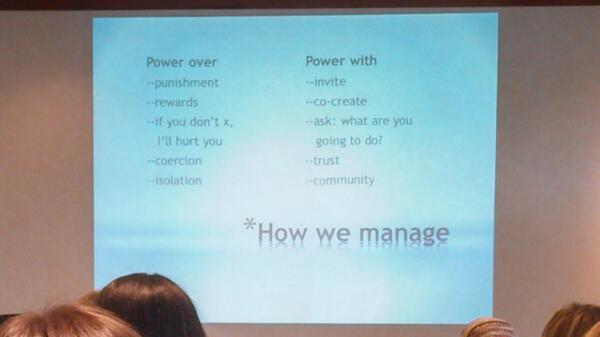
Classroom Management - Power With
I use the Daily Engagement Assessment rules for my classroom management. Since my first day with them last year, they have done wonders for my room. These ten rules keep it clear what behaviour I require in my room and also serve to help students do their best in my room. If students are following the DEA, they will make progress. These rules, rather than simply being a list of do's and don'ts provide students the tools and power to succeed. 

A No Failure Classroom goes even further to create "Power With" situations as opposed to "Power Over" situations.

More than a few times, I've had situations that require a... gentle word with students. Bob lays out simple ways to deal with this after pulling a student outside
    BiIkJetIYAAYi0G.jpg
  • I am on your side
  • I am here for your success. Do you want to be successful?
  • Can we go back inside and do what it takes to be successful?
The key here is to not argue behaviour. At that point, it is about gaining power over someone whereas this conversation gives both parties power to do something together. More than once I  have had a conversation like this with students. Before, the conversation could take many minutes, filled with arguments, apologies, and explanations. Now, it is quick and clear. Sometimes I have to have this conversation with the same student daily. More often than not, however, the behaviour changes. 

There has been one instance in mind that I think is a perfect example of a no fail classroom. This student and I have had many conversations and struggles through the year. Having had these conversations with this student and knowing what is going on in his/her life, I have been working with the student to get work in and focus in class. The changes were startling when I changed from a traditional approach to the No Failure Classroom.

Before After
Student would miss 4 of 5 days Student misses 1 of 5 days
Student argues when asked to put away
technology or take out materials
Student initially argued, but now does it
after being asked once
Student would not participate in the Daily
Engagement Assessment and would roll
eyes frequently during class
Student participated 3 out of 5 times
Student would respond to my prompts
with an "I don't know" or "I will not" or
"I don't understand anything"
Student initially responded as before,
but after a few days of consistent help
and prompting, began to make
connections without teacher aid
Student would work, even on a basic
level with others. Student would refuse
to join groups or pairs.
Student is still reluctant to work with
others, but will do so, especially if a job
has been given to the student (like note
taker or artist or runner)
Student was rude to others, including me
on a fairly regular basis. 
Student initially responded as before,
but now is a good "classroom citizen",
helping clean up and helping others.

It was clear that the initial change caught the student by surprise. After a few days though, (s)he caught on to what I was doing and joined in. Here's an example of our progression:

Day 1 - "I know this isn't what you want to do, but I need you to do this." "Why? There's no point."

Day 3 - "I know this isn't what you want to do, but I need you to do this." "really.... okay"

Day 5 - "I know this isn't what you want to do, but I need you to do this." "ya, ya okay..."

Day 7 - "I know this isn't what you want to do..." "but you need me to... I know. I got it."

By day 7, this student was participating more, offering to help, etc. I was taken aback! With some other students the "broken record" phrase was what I discussed above about success. With that too, quick change occurred.

Having spent my semester slowly involving these techniques, I don't know how I ran my classroom before. This has changed everything about how I address students, see students, think about students, and it has changed how they see me. I definitely see more action and more excitement about things than before. What a great way to end a year!


Wednesday, May 14, 2014

Google 80/20 Project - Plus Deltas

I've been working on my follow-up to the Google 80/20 project that I piloted with my IIIs and IVs this year. I had typed up an intermediate post, but held off for all the reasons Rachel stated in her previous post as well as a few personal issues that got in our way (AKA an acute concussion and a broken wrist). My classes and I just finished our presentations and I'd like to do two more posts. This one, where I address some questions and discuss my observations (and whether they are a + or a δ) and conclusions and another when I discuss the kids' feedback.

Observations

  • The students really enjoyed being able to choose what they wanted to study. They all chose topics that meant a lot to them. This made the entire process more enjoyable. +
  • Many students felt that they had all the time in the world and were caught doing other work more than once. δ
  • Students chose whatever they wanted, but some failed to connect it to Latin. δ
  • Some students took seemingly odd topics and managed to use Roman culture and myth to establish a connection. This was quite unexpected and interesting. +
  • Students felt held back by previously expressed ideas (from years of schooling) and felt they HAD to do a presentation visual (PowerPoint; Prezi; etc.) δ
  • Students turned in their correspondence with their CCs, but didn't use their CC for advice or peer editing. δ
  • Students, again I suspect, from years of schooling fell into this "presentational" mode where they stood in front of the class and explained rather than discussed. δ
  • It was easy to see who was comfortable with the free discussion. Students really worked to help each other during the final "presentation" asking clarifying questions. +
  • I got a clear view of what interests students. These are things I can use next year for instruction. +
 + Conclusions
A few things are clear to me here. If (and I think I will) I do this activity again, I will keep as much freedom as possible. Students who are interested, as the latest FL research suggests, do good work. I would be hesitant to place restrictions on topics, although I feel some may be a good idea, just because the connections some of the kids made were so unexpected and good. I would hate to hinder that. I will be interested to see student responses.

I think I will want to do this earlier in the year. Some of the data  I took in about who was comfortable discussing would be useful for further instruction. I also think it may be beneficial, if done earlier in the year, to tie an assessment to it (using student questions and feedback).

 δ Conclusions
There are some things I'd definitely change. Most of these changes are based on the deltas I noticed. Once I get student surveys in, this list may be added to or change, but I definitely think I'll do these things next year. 
  1. A set timeline with due dates for rough drafts and peer editing - I hope this would combat the feeling of having endless time and help students use each other as resources.
  2. Ban presentational programs - I am, honestly, so tired of PPT and prezi. Next year I think I will just require student to have a different visual. 
  3. Require students to discuss Roman cultural perspectives, products, or practices. - I am on the fence with this one. Perhaps I would require this for younger groups. I want them to have freedom, but I want to make it useful to our class and avoid a "book report" on a topic. 
  4. I would change the set up of the classroom for this - I would put the desks in a giant circle or perhaps in small groups while I floated between them. I would hope that this would encourage more discussion. 
Student surveys are coming and will, more than likely, change some of my conclusions. I will update more once they come in. 

Tuesday, May 6, 2014

Untextbooking: Of Monsters and Men

I promised to update you on my experiment in untextbooking, and this is one of at least two updates; this one will discuss an approach I've taken to material that would normally be considered too difficult for a Latin II class, and another following it this summer will be my thoughts on the semester as a whole.

I'm really sorry that I haven't been updating as often.  Miriam and I both have taken on a lot this semester--in addition to creating entirely new curricula for our classes (untextbooking and Miriam's 80/20 Google classroom approach), we both teach online part-time and are enrolled in graduate school full-time.  We've also been working on an online Latin curriculum for a local online high school.  It has been a very busy semester.  If you add to that the new house I just bought (and spent the weekend refinishing floors for), I have a lot on my plate and just haven't had time to write a blog post.

However, here is one for a unit that I and my students have really enjoyed.  It's been vocabulary-intensive, but fun, and has triple repetition built in to just the readings, so if you add to that a question and answer or storytelling approach, the unit really builds up that vocabulary that it uses.

Without further ado, here is a link to the unit itself, and I'll explain the various pieces below.

Pliny Unit Of Monsters and Men

The first things listed on the unit I linked are there for the teacher's use.  They are the original Pliny with my (quick and possibly somewhat inaccurate) literal translations.  From there, I created an embedded form that mostly focused on changing the word order into something more comprehensible to my Latin II students, but generally does not change either vocabulary or grammatical forms.  Finally, I created what I called pre-readings with lists of vocabulary and very repetitive and expanded readings based on the embedded version of the Latin.

You can scroll down the linked document to find the format of the handouts I gave my students; we began with four days of vocabulary via TPRS and follow-up readings with a lot of question and answer.  After those four days, we read all of the four pre-readings as a unit and I assigned students the following:

The goal was some great synthesis of the information and a chance to play with Pliny's format and his means of authenticating his materials.

I had some wonderful student work as the result of the assignment.  I'd love to post it all here, but here are some examples:
Homines Cani--The gray-headed, gray-eyed people from Albania.
Homines Pedibus Aversis--Super fast men with backwards feet.

Anthropophagi--Cannibals who drink from human skulls.
One of the most beautifully illustrated
original races students created.
All of the Plinian races plus the original race on one page.
Following this I posted some of the student work on the board and asked questions that highlighted the upcoming vocabulary and a grammatical form I was slightly concerned about.  Then we read the embedded version of the section, and followed that with the original Pliny.  Again, repetition and question and answer were very important in this section.  

Lastly, because we had approximately two state-testing-free days left before I needed to do my last test before finals (so much testing at the end of the year--I am timing that test around state tests and AP tests), I added Pliny's description of a unicorn (with elephant feet!) and followed pretty much the same process.

The test will include general comprehension questions for the sections of Pliny, as well as some recognition questions including the grammar (contextual understanding of the vocabulary).

This has been a really fun unit for myself and my students.  We analyzed why the Romans could believe in such things, what kind of sources Pliny might have been referencing, the motivations for various parts of the descriptions, and the background of Pliny himself.  I got to teach material that inspires me.  It has been a really great experience, and I found a new way to present material to help it make sense to my students.

Thursday, March 6, 2014

Blogs I Follow


This is just a quick post to gather a list of some of my favorite blogs.  This is by no means comprehensive, but I tried to choose some blogs that have given me much to ponder, items to use in my classroom, and tend to post regularly.

So, in the hopes of boosting readership for the amazing bloggers below and also of helping others find blogs that can help them gain great ideas and insight, here are some of the blogs I follow closely:

General Education Blogs

Blogging Through the Fourth Dimension is Pernille Ripp's insightful and out-of-the-box thoughts on teaching her grade school classes.  Even though I have never taught anyone younger than 13, I still find a lot to think about when I read her blog.
Crazy Teaching focuses mostly on the flipped classroom, what that means, and breaking the rules of traditional education.
The Innovative Educator is actually a homeschooling blog, but she offers not only great ideas for innovative classroom teaching but is also tuned in to politics and testing issues, so if you are interested in those things, you can find writing on them here.
The Nerdy Teacher is creative and often incorporates technology into his teaching.  To the point I debated whether he belonged in the category below.

Technology Related

Educational Technology Guy is great about just offer gobs and gobs of new technology, quick reviews, and some shortly-described educational uses.
Hack Education is one of the first educational blogs I started reading and I gladly recommend reading Audrey Watters' blog.  She offers deep insight into the technology trends in education.

Language-Related

The Everyday Language Learner is a great place to go to see new technology, new thoughts, and new approaches to language learning (which I can then turn towards language teaching!).

Latin and Comprehensible Input

Todally Comprehensible Latin is a new blog by Keith Toda (@keithtoda) and is following his exploration into a Latin class based solely on comprehensible input.  A great read and already prolific.
Imparting Fluency is a great Latin blog by another comprehensible input Latinist, James Hosler.  He also incorporates videos of his teaching to help show his approaches in action.

Latin in General

in aversa charta is a blog that offers a wide sampling of writing in Latin over various topics and student-created stories.  Some stories are not perfectly school-appropriate, so definitely pre-read anything you decide to use in your class.
Techna Virumque Cano is a blog by one of the creators of Operation LAPIS, a game-based method for teaching Latin.  Very interesting stuff here.

Friday, January 17, 2014

Untextbooking: What Does the Fox Say?

I've been feeling the need for something bigger lately. Teaching chapter-to-chapter has ceased to be all that fulfilling. I tend to feel like my students are missing out on a bigger picture, and that I am failing to offer them Latin as a complete experience. Luckily, I've recently received some divine aid from Muse #10, the much-ignored muse of teaching.

Since it's nigh unavoidable, I assume many of you have heard this song:


I was exposed to it as the song gained popularity as a youtube sensation and internet meme--and now I even hear it periodically on the radio, which is worth mentioning because it is really just a funny parody song by a Norwegian comedian.

However, I was suddenly inspired one day while I listened to some students attempting to sing the song. It's basically a bunch of animal names and sounds, all of which would make a great foundation for some Aesop. In case you're not familiar (my husband assures me that you probably are), Aesop recorded common Greek fables that were also popular in Rome. They highlight common Greek and Roman values, customs, and assumptions about social order, and a good percentage do so by using animals as main characters. These make for a great way to keep culture contextualized and in the language.

So now I have some end goals, and even one of my steps on the way. But I've had those before. The thing that has changed is my own knowledge of activities and methods to bring students to Latin that contains new vocabulary and new grammatical structures without it being hard.

I've practiced TPRS (for our write-ups of various aspects go here, here, here, here, and here) for ten years now in my Latin classes, and enjoy it.  And I've felt that it's possible that TPRS alone would let me prepare students for Classical Latin authors, even with their huge and varied vocabularies and grammar.  However I never took the plunge; it seemed like a huge change and too much work, I was comfortable and familiar with my textbook, what if I was wrong and ruined a whole generation of students--there were a lot of excuses not to do it.

But now, with a larger toolbox I'll discuss below, I have fewer excuses and more drive to leave the textbook behind.  As I write this, the unit I'm creating is just that--in the process of being created--and so as I finish aspects of this unit I'll add their links to this post.  Miriam and I are both experimenting with big ideas this semester, and I'm as excited about her Google project as she is about untextbooking (not a term I made up, but one I'm totally taking over for my purposes).  Having a great friend to support me in this endeavor helps stoke my courage.

The Toolbox


My list of tools is actually still growing.  I have a wonderful group of friends and colleagues who also read research and blogs, and are willing to experiment with their classes to figure out what works for them and what doesn't.  They also share their knowledge (thankfully!) so I get to benefit from it.

I have two tools that are currently the center of my untextbooking: dictationes and embedded stories.  Each tool, when added to CI techniques like TPRS and WAYK (we have posts here, here, here, and here), allows for even more repetitions of the vocabulary and a really strong reinforcement of the grammar I choose to focus on.

Dictatio

Dictationes are what they sound like: I dictate sentences to students, they write them.  That might feel like nothing new, but it gives students a chance to gauge their spelling and aural comprehension of Latin, and, since I have them check their own spelling and we review through the sentences to make sure students understand every word, dictationes become a great way to introduce new vocabulary and grammar structures (a great detailed explanation is offered here).

For my current purposes I am actually creating sentences that specifically cater to the grammar structure I want to emphasize and repeat the vocabulary words I think my students need most.  I like to start a unit with a dictatio as a great intensive introduction to the new forms.

Embedded Stories

Like the dictatio, embedded stories are not my creation.  I think every TPRS-based teacher has blundered into something close at times, but not as a concerted effort and not in an organized way, so I really appreciate this form of Comprehensible Input.  Embedded stories are really the tool that caused me to realize that I can leave the textbook behind.

Embedded stories can be traced back to Laurie Clarcq (she has a very charming story about her inspiration here), and they are wonderful tools to scaffold the more difficult texts I want my students to read.  As I started using them to scaffold the longer texts in my students' textbook (which is rarely difficult grammatically, but tends to throw an overwhelming amount of vocabulary at students), I started realizing that the embedded stories could empower me to tackle pretty much any text I wanted my students to read.  That's when the discontent I'd been feeling towards the textbook (I have yet to meet a Latin textbook that aligns to CI, limits its vocabulary, or moves away from strict grammar sequencing) finally came to a head.  I got permission to start this semester with my own units, created with authentic Latin texts in mind, and I started creating the unit that I will be posting here.

Image Property of Wikipedia

So, What Does the Fox Say?


It barks.  Just in case you weren't sure.  But for my purposes, it's an ancient mystery that my students will be expected to unfold and, yes, sing as a means to learn animal names and sounds.  Once students have worked their way through the song, they'll read two of my favorite Aesop's fables: "The Fox and the Cat" (wherein the fox brags about her many skills but the cat's one skill turns out to be the most useful one) and "The Frog and the Bull" (wherein the frog blows herself up in order to be as big as a bull).  We'll talk about the cultural significance of the fables' morals.  We'll play with the fables, perhaps draw them or simplify them into children's books (that part of my lesson plan isn't formed as of this writing).  Throughout, students will be inducted into much more "difficult" vocabulary and grammar than they had worked with before.

After the fables, I am planning to introduce them to the "scientific" thought of Pliny the Elder by choosing a relevant animal passage or two.  This will have to be seriously scaffolded, but I believe that by the time we arrive at the actual Pliny passages, my students will be ready to read and comprehend them.  This will be the end of the most comprehensive and well-rounded yet cohesive unit I have ever taught.  I am really excited.

So far, my students have done the dictatio and worked on the vocabulary.  I gave them a handout and they figured out quickly what they were learning.  There were groans ("I hate that song!") and sounds of glee ("This is your best lesson so far!"), both of which are great--they imply an emotional reaction to something they are reading in Latin.

So here it is, as it develops (remember that I will keep adding to it as I develop aspects of it--and since it's on Google Drive, I'll also be adding to each page and correcting any mistakes I notice along the way)*:
Overarching Lesson Plan
"The Fox"
Materials Created for the Song 
Handout for Students
"The Fox and the Cat"
Materials (Including the Story, Embedded Version, and Dictatio)
Handout for Students (Writing these)
"The Frog and the Bull"
(These materials will be written next)
Pliny the Elder
Did I mention I'm excited?  Because I'm excited.  And as we all know, an excited teacher is a better teacher.  I think these lessons will be the best I've ever offered in my classes.

*Edit: I should mention that the non-handout materials are basically not formatted because they're the notes I keep to teach from.  Also, there are contributions (none attributed because I am a poor friend) by Miriam Patrick here and there.

Friday, January 10, 2014

80% of me, 20% of you - adapting Google's 20% time idea to the classroom

For a while both Rachel and I have wanted to try out Google's idea of 20% innovation time in our classrooms. We did the research, but were waiting for a final push to try it out. Between frustration with textbooks, testing, and what we were able to look at this past fall at the American Council on the Teaching of Foreign Language's 2013 conference, we have finally decided to give it a try.

This Spring, I am piloting my version of the 80/20 project with my Latin IIIs, IV, and AP students. I will be posting, hopefully, regularly on the process and the reviews. I intend to have students fill out surveys every few weeks to check in on their progress, but also get their feedback on the project itself. In this post, I'm going to set forward the premise of the project and talk about my initial reactions.

This link goes to my outline of the project. Students are being given an entire semester worth of 20% of time to work on this project and I will be using it as half of their final exam (we have to give performance exams each semester measuring speaking and writing progress). I don't want to repeat what is in the document, so I will try and address some of the questions they asked me instead while we went over it:

Frequently Asked Questions by Students
  1. What will we be turning in?Students will be turning in almost a portfolio of their project. They will need to have a presentation to share, a physical product to show, notes, cited resources, and their correspondence with their CC. I will use all of these elements to grade them using the rubric in the link. 
  2. How long does our correspondence have to be? I do not expect, especially in the beginning, long correspondence each time. Some times will be longer than others. In the beginning, they will introduce themselves and their ideas and as they research, their ability to discuss should grow (ergo, they will be making progress in their writing)
  3. So, the topics must relate to Rome? Not necessarily. The topics must relate to our classroom. For example, a student may take a survey of the class and find out their favourite movies/shows/music/etc. Then, they may look to see how much of an influence Roman culture, history, and language have in our modern media. Another student may be interested in cooking. They may look into Ancient recipes, or perhaps look to see how differently we do things or compare health standards or, just for fun, might try to cook modern recipes using only ancient methods. Students may create games for the class to play, videos to watch, etc. 
  4. Why can't we just know the day we're presenting now? I have found that students who know they are going the last day will wait until the last day to be done and, if we have extra time for example on a previous day, they will not be ready and will be upset. By asking each student to be ready the first day, I can go ahead and collect certain aspects (notes and correspondence) and begin building my grade that day. Everyone will have the exact same amount of time to prepare. 
Today I took my students to the lab for their first 20% day. They were given the period to pick a topic and complete their first survey. Below are my observations:
  • Some students will really struggle with the freedom. This is okay, and they need to know that it is okay. I sat with a few students who had no idea where to begin. I asked them what they liked to do or really enjoyed learning about. For the most part the response was, "but there is nothing Roman about..." So, we went over the connection part again. All my students ended up with a topic in the end and a clear connection.
  • I would change my initial survey to include a question about what resources they know they'll need. This will help me create resources more quickly and with more accuracy. 
  • Students were surprisingly excited to find out who their Classroom Comrades were (one of my favourite words, plus the alliteration is magical). They will find out over the weekend and be asked to begin communication ASAP. 
  • The students researched the entire period. Only once did I have to ask a student to focus. Since this project really focuses on their interests and their likes, I think, and hope, it will turn out to be easy work for them.
In my next post, I plan to update you on the progress of the project and take a look at the resources I am providing to my students. Stay tuned!